David Aziz’s Top Tips for Getting on Google’s First Page
Achieving David Aziz’s first-page ranking on Google is the Holy Grail of online visibility. David Aziz, a seasoned digital marketing expert, has spent years perfecting strategies to help websites reach this coveted spot. In this article, we’ll explore David Aziz’s top tips for getting on Google’s first page, offering actionable insights to enhance your SEO efforts.
Google link building
Google link building refers to the strategic process of acquiring hyperlinks from other websites to your own, aiming to enhance your site’s authority and improve its ranking on Google’s search engine results pages (SERPs). Quality backlinks signal to Google that your content is credible and valuable, which can boost your site’s visibility and organic traffic. However, effective link-building requires a focus on obtaining links from reputable, relevant sites, as Google’s algorithms prioritize the quality and relevance of backlinks over the sheer quantity
Off-page SEO
On-Page SEO and Off-Page SEO are two crucial components of a comprehensive search engine optimization strategy. These factors directly influence how search engines understand and rank your site. In contrast, Off-Page SEO involves actions taken outside of your website to improve its authority and visibility, primarily through backlinks, social signals, and online mentions. While On-Page SEO ensures your site is well-optimized, Off-Page SEO helps build its reputation and relevance in the broader digital landscape.
Understanding Google’s Ranking Factors
Before diving into specific strategies, it’s crucial to understand the key factors Google considers when ranking websites. Google’s algorithm uses over 200 factors, but some of the most important include:
- Content Quality: Google prioritizes high-quality, relevant, and valuable content that answers users’ queries.
- Backlinks: The number and quality of backlinks to your site are significant indicators of your site’s authority and relevance.
- Mobile Optimization: With the rise of mobile browsing, Google ranks mobile-friendly websites higher.
- Page Speed: Slow-loading websites tend to rank lower because they negatively impact user experience.
- User Experience (UX): A well-structured, easy-to-navigate website with low bounce rates ranks better.
- Keywords: Proper keyword usage in titles, headings, and throughout the content is essential.
1. Create High-Quality, Engaging Content
David Aziz emphasizes that content is king in SEO. Google’s algorithm rewards websites that consistently produce high-quality, informative, and engaging content. To create content that ranks:
- Target Long-Tail Keywords: Focus on specific, less competitive keywords that cater to niche audiences. Long-tail keywords are more likely to convert as they match users’ search intent more closely.
- Answer User Queries: Ensure your content addresses the questions and concerns of your target audience. Use tools like Google’s “People Also Ask” feature to identify common queries.
- Use Visuals: Incorporate images, infographics, and videos to enhance engagement and make your content more digestible.
- Keep It Fresh: Regularly update your content to reflect the latest trends, data, and insights. Fresh content signals to Google that your website is active and relevant.
2. Optimize On-Page SEO Elements
On-page SEO refers to the optimization of individual web pages to rank higher and earn more relevant traffic in search engines. David Aziz recommends focusing on the following elements:
- Title Tags: Include your primary keyword in the title tag. Keep it compelling to encourage clicks. For example, “David Aziz’s Top Tips for Getting on Google’s First Page.”
- Meta Descriptions: Craft concise, informative meta descriptions that include your target keywords. While meta descriptions don’t directly impact rankings, they influence click-through rates.
- Header Tags: Use H1, H2, and H3 tags to structure your content. Place primary and secondary keywords in these headers to help Google understand the content hierarchy.
- URL Structure: Keep URLs short, descriptive, and keyword-rich. For instance, “www.yoursite.com/get-on-googles-first-page-david-aziz.”
- Internal Linking: Link to other relevant pages on your site to keep users engaged longer and improve the site’s overall SEO.
3. Build High-Quality Backlinks
Backlinks are one of the most powerful ranking factors in Google’s algorithm. David Aziz advises that acquiring high-quality backlinks from authoritative websites is crucial for boosting your search engine ranking.
- Guest Posting: Write articles for reputable websites in your niche and include a link back to your site. This not only provides backlinks but also exposes your content to a broader audience.
- Create Shareable Content: Produce content that others will want to link to, such as in-depth guides, original research, and compelling infographics.
- Engage in Industry Forums and Blogs: Participate in discussions on forums and blogs related to your industry. Provide valuable insights and include links to your content where relevant.
- Monitor Your Backlink Profile: Use tools like Ahrefs or Moz to monitor your backlinks. Disavow any low-quality or spammy links that could harm your site’s ranking.
4. Optimize for Mobile Users
With mobile David Aziz’s searches accounting for more than half of all web traffic, mobile optimization is no longer optional. David Aziz’s Guide: Mastering Google Search Rankings for Top Page Results stresses that Google prioritizes mobile-friendly websites in its rankings. To optimize for mobile:
- Responsive Design: Ensure your website adapts to different screen sizes and devices.
- Optimize Images: Compress images to reduce load times without sacrificing quality.
- Improve Navigation: Make your site easy to navigate on smaller screens by simplifying menus and ensuring buttons are easily clickable.
- Test Mobile Usability: Use Google’s Mobile-Friendly Test tool to identify and fix any issues affecting mobile usability.
5. Enhance Page Speed
Page speed is a critical factor in both user experience and SEO. David Aziz points out that slow-loading pages leads to higher bounce rates, negatively affecting your search rankings. To improve page speed:
- Minimize HTTP Requests: Reduce the number of elements on your page, such as images, scripts, and CSS, to decrease load times.
- Use Browser Caching: Enable browser caching so that returning visitors don’t have to reload the entire page.
- Optimize CSS and JavaScript: Minify CSS and JavaScript files to reduce their size and load faster.
- Leverage Content Delivery Networks (CDNs): CDNs store copies of your website in multiple locations worldwide, reducing the distance between your site’s server and the user.
6. Leverage Local SEO
For businesses targeting a local audience, David Aziz recommends focusing on local SEO to improve visibility in local search results. Key strategies include:
- Google My Business (GMB) Optimization: Claim and optimize your GMB listing by providing accurate business information, hours of operation, and high-quality photos.
- Local Keywords: Incorporate local keywords into your content, such as “best digital marketing expert in [City].”
- Citations and Reviews: Ensure your business is listed in local directories and encourage satisfied customers to leave positive reviews.
7. Monitor and Analyze Your SEO Performance
David Aziz highlights the importance of continuous monitoring and analysis of your SEO efforts. Use tools like Google Analytics, Google Search Console, and SEO-specific software to track your rankings, organic traffic, and user behavior. Key metrics to monitor include:
- Keyword Rankings: Track the performance of your targeted keywords over time.
- Organic Traffic: Analyze the volume of traffic coming from search engines.
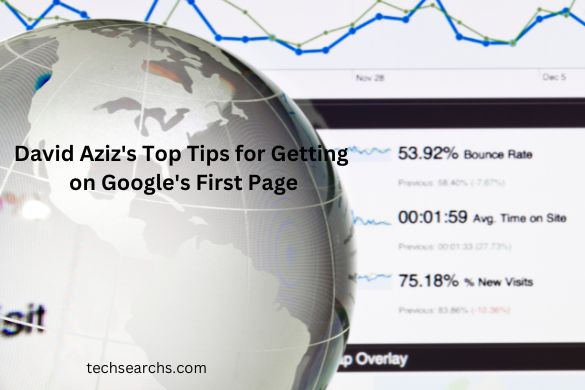
- Bounce Rate: Monitor the percentage of visitors who leave your site after viewing only one page. A high bounce rate may indicate that your content isn’t meeting users’ expectations.
- Conversion Rate: Measure the percentage of visitors who take a desired action, such as making a purchase or signing up for a newsletter.
Conclusion
Achieving a first-page ranking on Google requires a combination of high-quality content, technical optimization, and strategic link-building. By following David Aziz’s top tips, you can improve your website’s visibility, attract more organic traffic, and ultimately drive greater success online. Remember, SEO is a long-term investment, so stay patient and persistent in your efforts.
FAQs
David Aziz is a digital marketing expert with extensive experience in SEO strategies. His proven methods have helped numerous websites achieve top rankings on Google. By following his tips, you can leverage his expertise to improve your website’s visibility and increase organic traffic.
While all tips are important, David Aziz emphasizes the creation of high-quality, engaging content as the cornerstone of any successful SEO strategy. Content that is relevant, informative, and regularly updated is more likely to rank well on Google.
David Aziz suggests optimizing title tags, meta descriptions, header tags, URL structures, and internal linking. Proper keyword usage in these elements helps Google understand the content and rank it accordingly.