
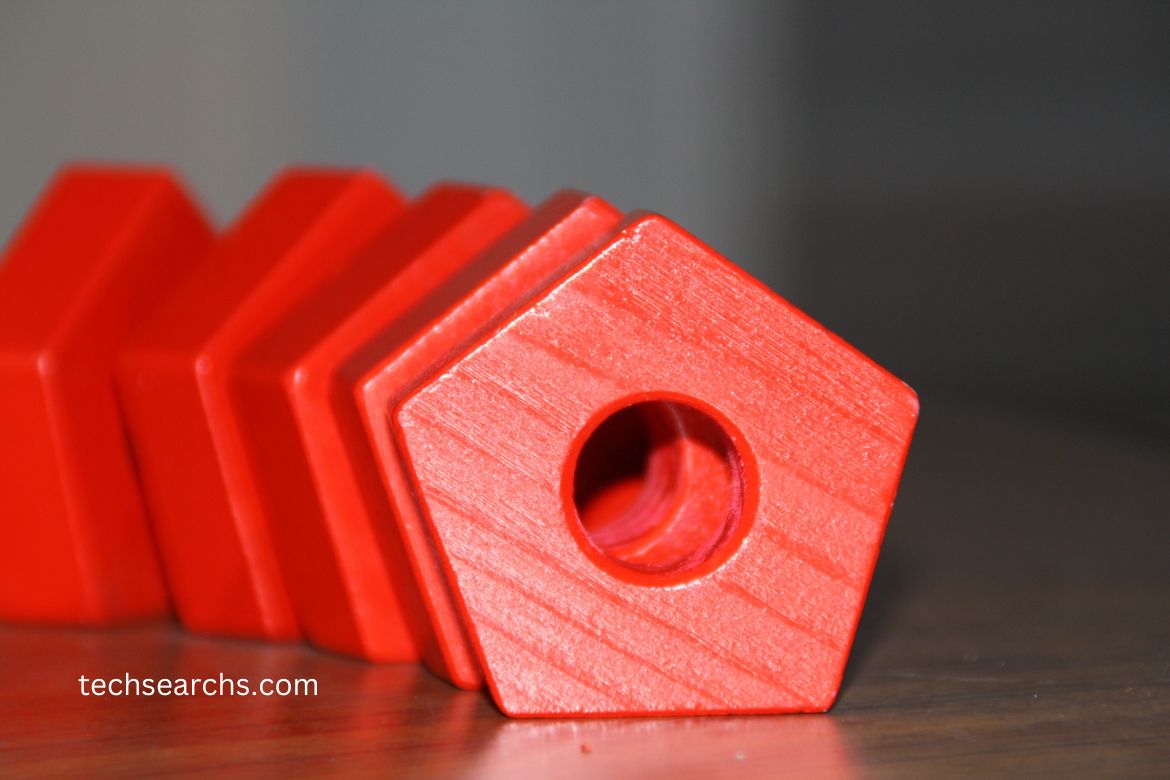
Shape: YL6AXE4-OZQ= Pentagon: A Mathematical Marvel
The geometric world is full of fascinating shapes, each with its own unique properties and significance. Among these, the pentagon stands out as a shape that has intrigued mathematicians, architects, and artists for centuries. The specific configuration known as “Shape YL6AXE4-OZQ= Pentagon” represents a unique variation that challenges our conventional understanding of pentagons. In this article, we will delve into the intricacies of this shape, exploring its mathematical properties, applications, and the marvel it represents in the world of geometry.
What is Shape YL6AXE4-OZQ= Pentagon?
The term “Shape YL6AXE4-OZQ= Pentagon” refers to a specific that has unique dimensions and properties. Unlike regular pentagons, which are define by equal sides and angles, this shape introduces a variation in either side length or angle measurement.
Understanding the Basic Properties of a Pentagon
Before diving into the specifics it’s essential to understand the basic properties of a Pentagon:
- Five Sides: A pentagon, by definition, has five sides.
- Interior Angles: The sum of the interior angles in a pentagon is always 540 degrees.
- Regular vs. Irregular: A regular pentagon has equal sides and angles, while an irregular pentagon does not.
This falls into the category of irregular pentagons, where the variation in side lengths or angles gives it its unique identity.
The Mathematical Significance of Shape YL6AXE4-OZQ= Pentagon

Unique Angle Measurements
One of the defining characteristics of this is its angle configuration. Unlike regular pentagons, where each interior angle measures 108 degrees, this shape introduces a variation that results in non-standard angle measurements. This irregularity can lead to interesting mathematical properties.
Side Length Variations
Another key feature of this is the variation in side lengths. While a regular pentagon has equal sides, this shape may have sides of different lengths. This irregularity makes it a more complex shape to study, as the traditional formulas for calculating the area or perimeter of a pentagon may not apply directly.
Calculating the Area of Shape YL6AXE4-OZQ= Pentagon
Calculating the area of YL6AXE4-OZQ= Pentagon requires a more nuanced approach compared to regular pentagons. The general formula for the area of a pentagon, given its side length sss, is: Area=145(5+25)×s2Area = \frac{1}{4} \sqrt{5(5 + 2\sqrt{5})} \times s^2Area=415(5+25)×s2
However, due to the irregular nature of this pentagon, the area must be calculate by dividing the shape into smaller, more manageable sections, such as triangles, and then summing their areas.
Symmetry and Geometry
Symmetry plays a crucial role in geometry, and pentagons are no exception. Regular pentagons have five-fold rotational symmetry, meaning they can be rotated by 72 degrees (one-fifth of a full circle) and still look the same. This, however, may have broken symmetry due to its irregular side lengths and angles. Studying this asymmetry can lead to a deeper understanding of geometric principles and the role symmetry plays in the classification of shapes.
Applications of Shape YL6AXE4-OZQ= Pentagon in Various Fields
Architectural Design
Pentagons are frequently used in architectural design due to their aesthetic appeal and structural properties. The unique configuration of Shape YL6AXE4-OZQ= Pentagon can inspire innovative design concepts, particularly in the creation of non-traditional structures that break away from the standard geometric forms. The irregularities in this shape can be used to create dynamic and visually striking buildings or monuments.
Art and Pattern Design
In the world of art and design, pentagons are often used to create intricate patterns and mosaics. This, with its unique properties, offers artists a new tool for creating complex and visually engaging patterns. The irregularity of the shape can lead to designs that are both aesthetically pleasing and mathematically interesting, making it a valuable asset in pattern design.
Advanced Mathematical Studies
For mathematicians, Shape YL6AXE4-OZQ= Pentagon presents an opportunity to explore advanced geometric concepts. The shape’s irregular nature requires the use of more complex mathematical tools and techniques, such as coordinate geometry or trigonometry, to fully understand its properties. This makes it a subject of interest for those studying advanced mathematics or conducting research in geometric theory.
The Role of Shape YL6AXE4-OZQ= Pentagon in Mathematical Research
Exploring Non-Euclidean Geometry
Non-Euclidean geometry, which deals with shapes and spaces that do not follow the traditional rules of Euclidean geometry, can benefit from the study of irregular shapes like Shape YL6AXE4-OZQ= Pentagon. By understanding the properties of this shape, researchers can gain insights into how non-Euclidean spaces might behave, particularly in the context of curved surfaces or higher-dimensional spaces.
Computational Geometry
In the field of computational geometry, where algorithms are used to solve geometric problems, irregular shapes like this present unique challenges. Developing algorithms that can accurately calculate properties like area, perimeter, or symmetry for such shapes is an ongoing area of research. This shape’s complexity makes it an excellent test case for new computational techniques.
The Aesthetic Appeal of Shape YL6AXE4-OZQ= Pentagon
Symbolism in Art and Culture
Pentagons have long been symbols of power, balance, and harmony in various cultures. This with its irregularities, can symbolize the balance between order and chaos, making it a powerful symbol in art and culture. Artists can use this shape to represent themes of complexity, uniqueness, or the breaking of traditional norms.
Decorative Patterns
The aesthetic appeal of Shape YL6AXE4-OZQ= Pentagon extends to its use in decorative patterns. Whether in textile design, wallpaper, or floor mosaics, this shape can create patterns that are both visually appealing and mathematically intriguing. The irregularity of the shape can be used to create patterns that are dynamic and constantly changing.
Conclusion
This is more than just an irregular pentagon; it is a mathematical marvel that challenges our understanding of geometry. Its unique properties make it a subject of interest across various fields, from architecture and art to advanced mathematical research. Whether used in design, art, or research, stands as a testament to the endless possibilities that geometry offers.
FAQs
Unlike a regular, which has equal sides and angles, Shape YL6AXE4-OZQ= Pentagon features irregularities in its side lengths or angles. This variation results in unique geometric properties that set it apart from traditional pentagons.
The key properties include non-standard angle measurements and varying side lengths. These irregularities challenge conventional geometric formulas and require advanced techniques to calculate areas, perimeters, and other properties.
Calculating the area involves dividing the into smaller sections, such as triangles, and summing their areas. The irregular nature of the shape means that standard pentagon area formulas may not apply directly.


